
What You’re Really Buying When You Buy a Landmark
A Visit to the Geiser Grand, and the Due-Diligence Reality Behind Historic Mixed-Use Property
You can’t miss the signs for the historic Geiser Grand Hotel along I-84. I will be the first to admit that I’m a sucker for beautiful old buildings, so I detoured into Baker City specifically to take a look.
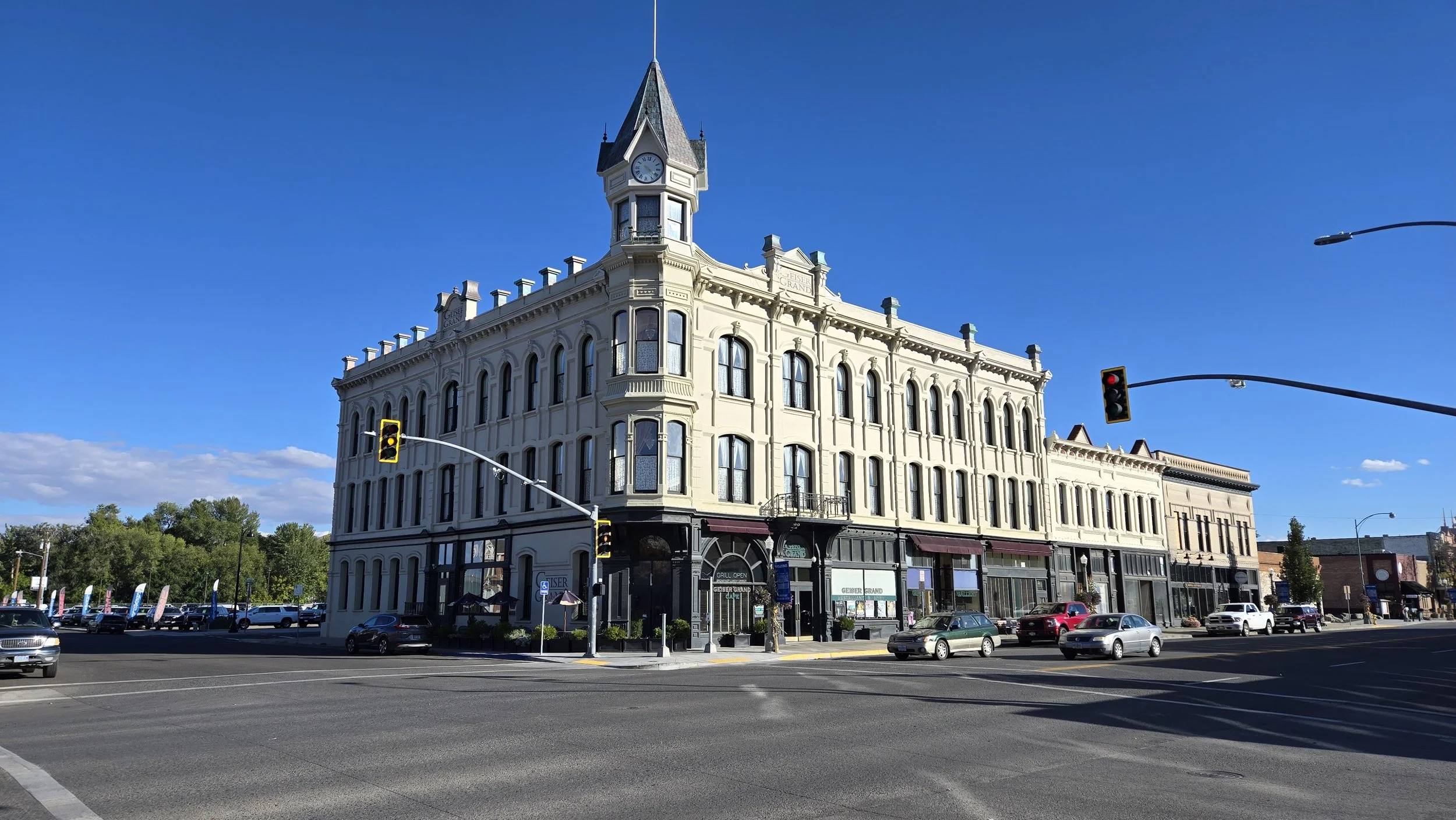
Drive down Campbell Street from the freeway and make a left onto Main Street. As you do, the Geiser Grand rises from a Norman Rockwell downtown, filling the windshield. I caught it on a glorious day that made the Geiser glow.
Three stories of Italianate brick on the corner of Main and Washington, a cupola and a clock tower that, according to local legend, rowdy cowboys once used for target practice.
A building that, for 25 years, nobody wanted
Clint Eastwood Stayed Here
That’s hard to picture now, standing on the sidewalk looking up. But the building wears both halves of its history at once.
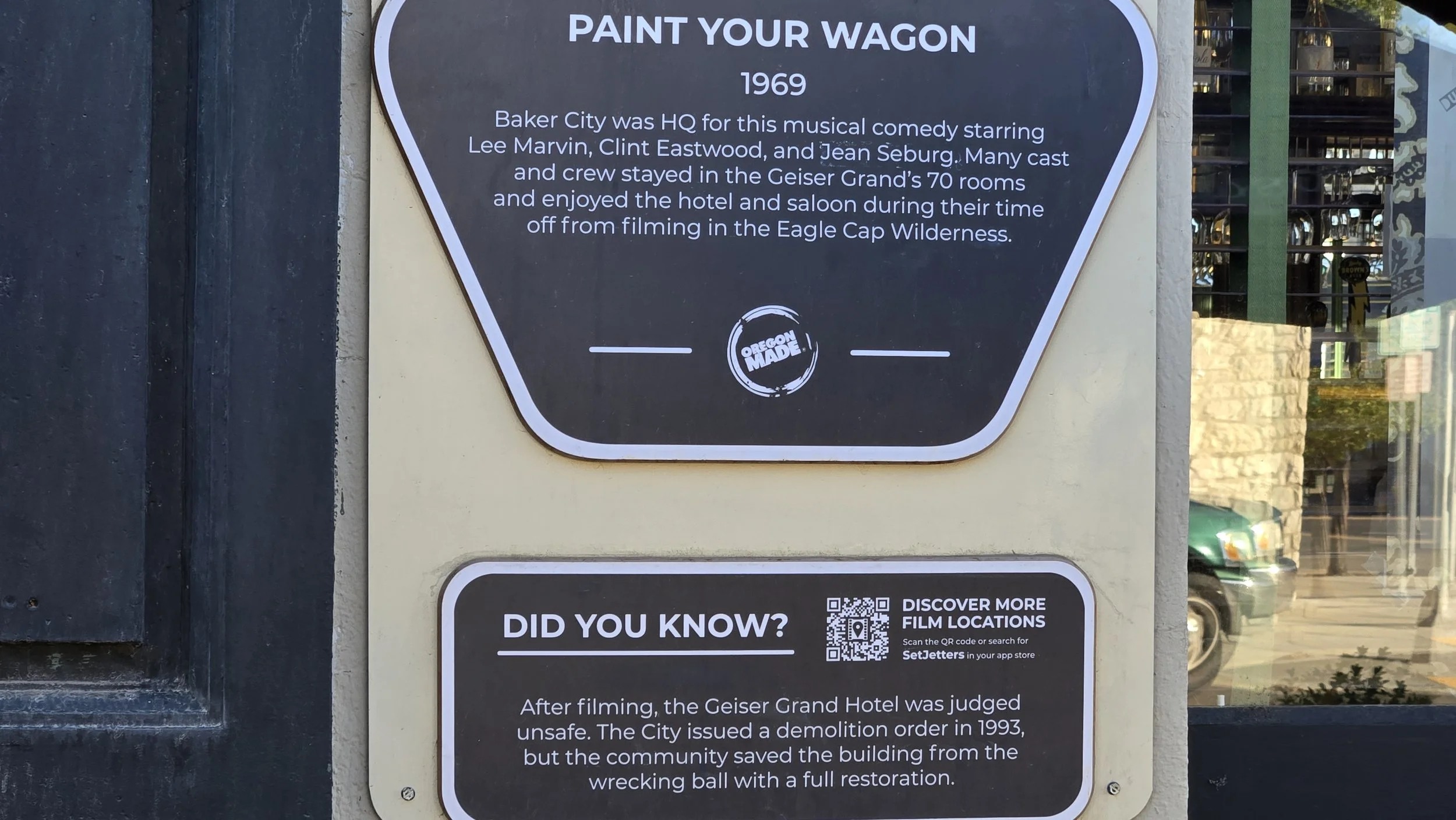
In 1969, Baker City was headquarters for the filming of Paint Your Wagon, the musical Western with Lee Marvin and Clint Eastwood. The production worked out in the Eagle Cap Wilderness, and between shoots the cast and crew came back to town to the Geiser Grand — bunking in its rooms and holding court in its saloon on their nights off. A movie star slept here. So did a lot of them.
The building was already old by then. The Geiser Grand opened in 1889, when Baker City was the boomtown heart of the Powder River gold rush — the self-styled Queen City of the Inland Empire. For a time it was the finest hotel between Seattle and Salt Lake City, with plate-glass windows, electric lights, and one of the first elevators anyone in this part of Oregon had ever ridden. The dining room sat 200. The rotunda climbed two stories to a stained-glass ceiling that still stops people in the lobby. Then the gold thinned, the boom moved on, and the Queen City got quieter. The Geiser closed its doors in 1968 and sat dark.
Saved From the Wrecking Ball
For roughly 25 years, it decayed. By the early 1990s the building had been condemned, a demolition order on the table — the grand hotel one signature away from the wrecking ball. What saved it was the community, and a multimillion-dollar, multi-year restoration led by Barbara Sidway that brought the mahogany, the chandeliers, and that stained-glass ceiling back to life. Today the Geiser Grand operates again as a hotel and restaurant, anchoring the downtown it has watched over since 1889.
It’s a remarkable story. It’s also a quiet warning for anyone who buys a building like this expecting the romance to arrive without the reckoning.
Mixed Use Means Mixed Loads Under One Old Roof
A building like the Geiser Grand was never just a hotel. It was lodging, a dining room that sat 200, a bar, retail at the street, and event space upstairs — several uses stacked under one roof and served by shared systems. Modern owners run them much the same way, with hospitality, food service, and assembly occupancies layered into a single envelope. For a buyer, that layering is the first complication. Each use carries its own code requirements, its own mechanical and electrical loads, and its own life-safety expectations. A commercial inspection of a mixed-use property has to read the building as a system of systems, not a single occupancy with a few quirks. Kitchen exhaust, assembly-space egress, guest-floor fire separation, public-space accessibility — each is a distinct question, and the answers do not always agree with one another.
The Charm Features Are Also the Capital Items
The things that draw people back to a restored landmark are the things that survived: the mahogany columns, the crystal chandeliers, and the stained-glass ceiling. Historic buildings are full of features that play as character on the tour and as line items on the capital plan. Original wood windows, plaster, ornamental masonry, gracious spaces — all of it is beautiful.
Behind the beauty rests the bones and guts of the building, the HVAC, electrical, plumbing. All that ages, too, and all of it eventually comes due. The work of due diligence is to tell a buyer which is which, and roughly when.
Old Bones, New Code
Most of what makes a historic commercial building risky is invisible on the tour. A structure raised in 1889 was built to the understanding of its day — unreinforced masonry, framing sized by rule of thumb, and no concept of the seismic and life-safety codes a building has to answer to now. Restoration closes some of that gap and hides the rest behind preserved finishes. A buyer needs to know what was actually upgraded in the building’s last major renovation and what was simply made to look finished. Wiring run behind original plaster, a sprinkler system threaded through a structure that never anticipated one, a roof and parapet carrying a century of patches — these are the conditions a commercial inspection exists to surface. None of them announces itself. All of them matter at closing.
Still the Queen of Eastern Oregon
The Geiser Grand Hotel still holds court in Eastern Oregon, but her last major remodel (that I could find) happened more than three decades ago. If you look closely, just from the outside, you see clues that she’s starting to feel her age. Very few things improve with age. People don’t, buildings don’t, and some movies, such as Paint Your Wagon, begin to feel a little dated.
Which brings me back to the movie and one of my favorite scenes. In Paint Your Wagon, Ben Rumson divides the whole world into two kinds of people: farmers and miners. He spends the film needling his nameless partner — Eastwood’s character, never once introduced by name — about which one he really is. At the end, when Pardner chooses the settled life, Rumson finally asks his name, and gets it: Sylvester Newel. Just one ‘l’. A good name for a farmer, Rumson decides.
And that’s me. Give me a good woman (nevermind, I have one!), a family to raise (done now), and honest work, and I’m a happy man.
Quoting Rumson again, “I always knew you had a farmer’s mentality.”