

The Reckoning Behind the Romance
What a System-by-System Inspection of a Century-Old Mixed-Use Building Actually Finds
A storefront held up, in part, by a cable. Those are the details we don’t want to miss.
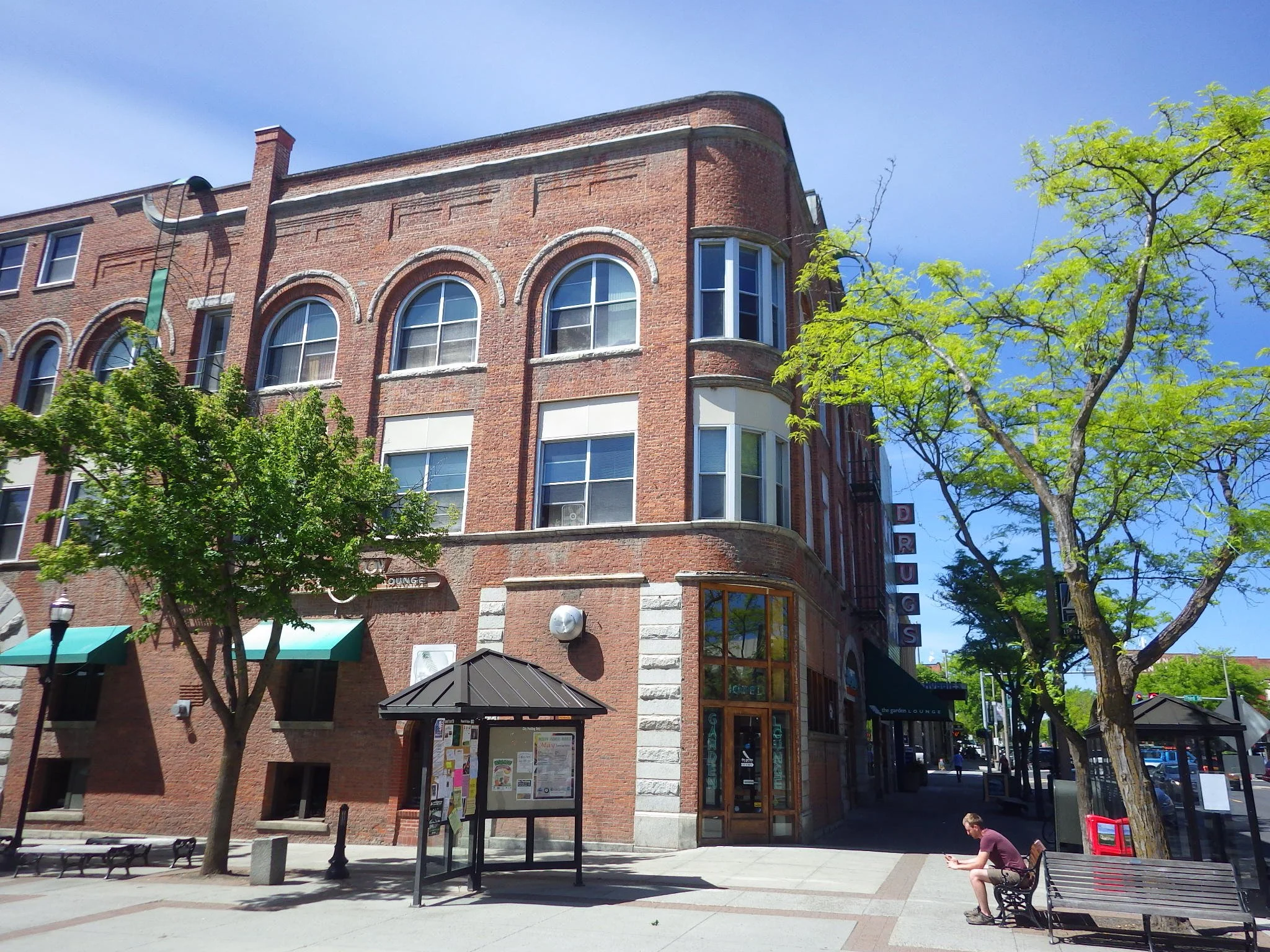
Nearly a decade ago a buyer hired me to read a century-old mixed-use building in the heart of a small town — as it actually stood, not as it photographed. From the sidewalk it was exactly what the brochure promised. The handsome street face was doing its job. So was the field repair quietly holding it there.
A place like this keeps most of its story out of sight.
Behind the Plaster
The wiring told the building’s age better than any cornerstone. Behind preserved walls there was considerable knob-and-tube — none of it energized where I could test it, but woven through the structure all the same. In the panels I found Federal Pacific Stab-Lok equipment, a make with a long-documented history of breakers that fail to trip, leaving a circuit live when it should be dead. That is a fire and shock risk that does not reveal itself until the moment it matters. Open junction boxes, missing bushings, and double-tapped breakers turned up across the older sections.
The catch I most want a buyer to understand wasn’t any one of those. The building’s primary grounding ran to a galvanized steel water line — standard for its day. But the plumbing had been partly replaced with PEX and copper, and plastic pipe carries no ground. Somewhere in those upgrades, the path that protects the whole building may have been quietly severed without anyone ever touching an electrical panel. That is what a walk-through is for: not the defect on the label, but the defect created when one trade’s good work silently undoes another’s.
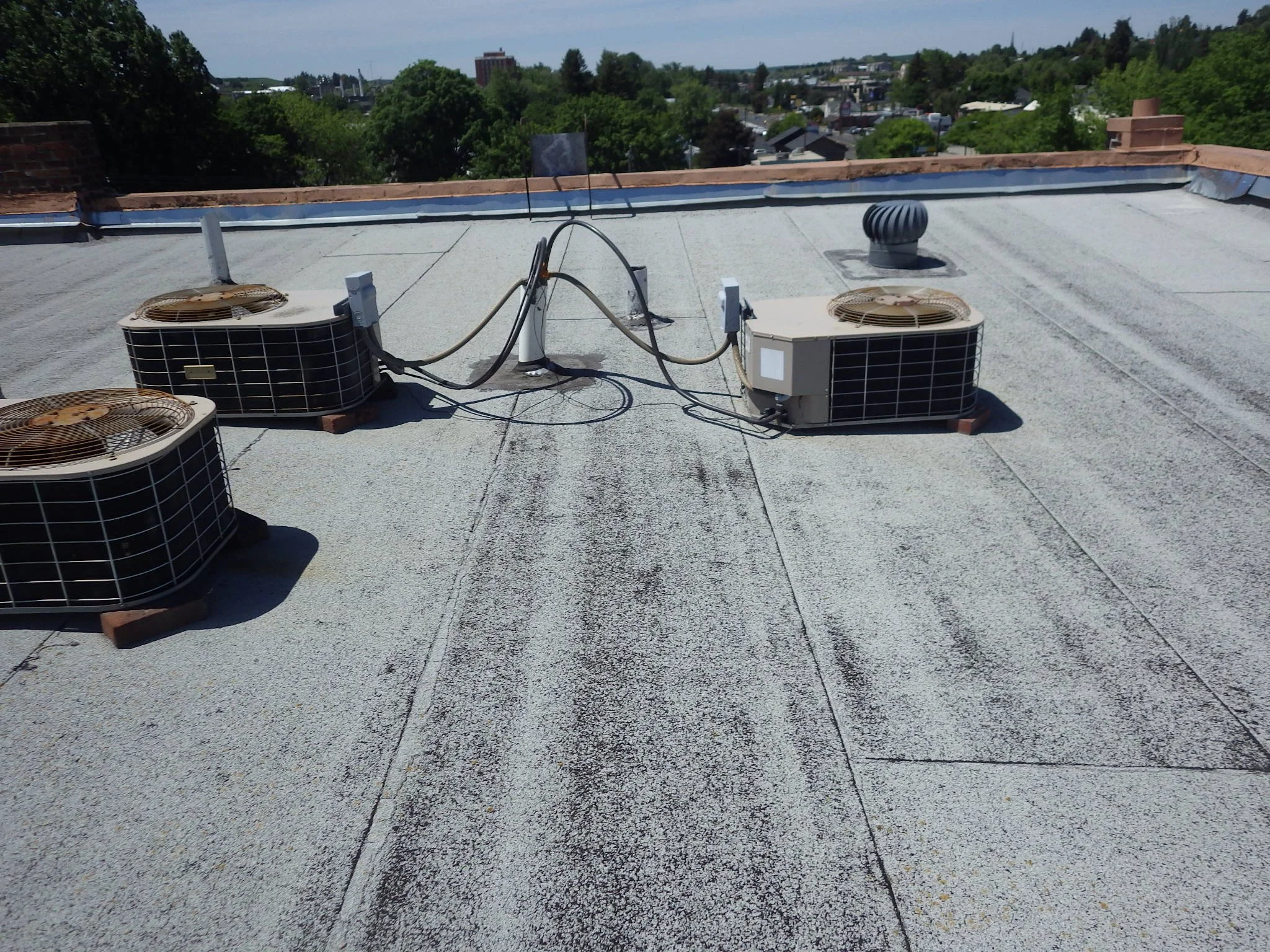
Old Roof, Old HVAC, Blown Budget?
What Comes Due All at Once
Old buildings don’t retire their systems on a convenient schedule. They retire them all at once. The heating and cooling plants — a patchwork of gas and electric furnaces, rooftop units, wall units, and a mini-split — were, with a handful of exceptions, past service life. Replacing them was not a line item; it was a campaign, with rough order-of-magnitude reserves well into six figures before anyone priced the difficulty of pulling equipment out from between floors. Of three domestic water heaters, two were 24-year-old commercial units with visible damage to the tanks, overdue and certain to take multiple tenants offline when they failed. The roof was modified bitumen in two vintages, the older half well past its warranty, on a low-slope deck that collects snow load — a six-figure reserve on its own. Six figures then. More now.
A gas leak at one of the water heaters turned up too, found and reported on the spot. That one wasn’t a reserve item. That one was a phone call before I left the building.
The Things That Don’t Announce Themselves
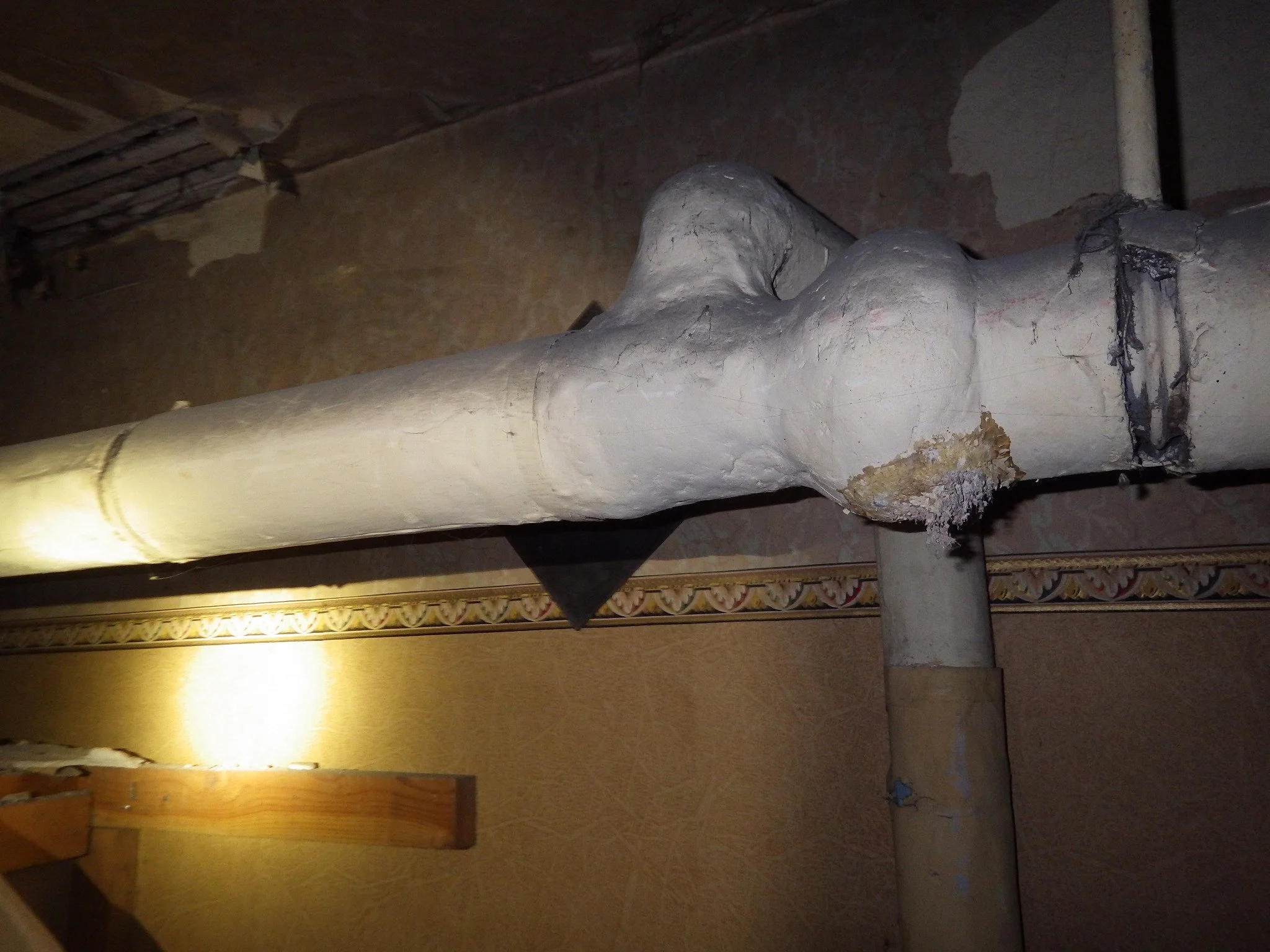
Potentially Friable Asbestos
The cable out front at least announced itself. The rest of the risk was the quiet kind. Pipe wrap and duct sealers in the crawlspaces and between the floors looked like asbestos-containing material, the sort of finding that turns a routine remodel into an abatement project the moment a wall opens. A breather pipe on one side pointed to an underground heating-oil tank — and an underground tank, closed or not, is the buyer’s environmental liability until paperwork proves otherwise. Sprinkler coverage reached the central elevator foyer and effectively nowhere else. The exterior fire escapes, the primary egress for the upper floors, hadn’t been load-tested since the late 1980s, and the last test had followed an injury.
What the Walk-Through Was Worth
None of these is a deal-killer standing alone. Stacked under one roof and surfaced before closing, they are something else: a capital plan. The value of the day wasn’t the romance of the building, which the buyer could already see. It was the arithmetic behind it — what was sound, what was theater, what was coming due, and roughly when — translated into reserves a buyer could carry into a negotiation instead of discovering one winter later. Did this scare off my client? No, but it did give him leverage. The building needed to perform financially as well as aesthetically. He structured the deal so it worked — and acquired a historic asset.
A restored or well-kept landmark sells itself on what survived — the brick, the millwork, the grand room that still stops people in the lobby. What it doesn’t sell you is the century of systems behind the finish, every one of them aging on its own clock. Due diligence is the work of telling the two apart. The charm is real. So is the reckoning. The only part a buyer controls is whether they meet it before the signatures or after.
I read historic mixed-use buildings system by system. If you’re buying one, call before you take on its future.