

A Bigger PCA Budget Will Not Buy You a Better Report
ASTM E2018-24 defines a baseline Property Condition Assessment and then, in a nonmandatory appendix, describes the ways a user can extend it. Knowing which extensions a property actually needs is what separates a useful scope from an expensive one.
Two Property Condition Assessment proposals on the same building can differ by a wide margin, and the difference is almost never margin. It is scope. One consultant quoted the baseline process described in ASTM E2018-24. The other added a roofing specialist, an opinion of long-term costs, and field-verified unit counts, because the buyer mentioned a refinance in year five.
Both proposals are ASTM-compliant. Only one answers the question the buyer actually has.
The standard is unusually candid about this. It describes the baseline process as carrying a moderate degree of uncertainty that will not suit every user, and it says scope modifications can reduce that uncertainty without eliminating it. It also warns that spending more does not, by itself, produce a more robust assessment. Extra budget and schedule buy reduced uncertainty only when they are aimed at the uncertainties that matter on the property in front of you.
That is the whole scoping problem, and it is worth understanding before a proposal gets signed.
What the Baseline Process Actually Delivers
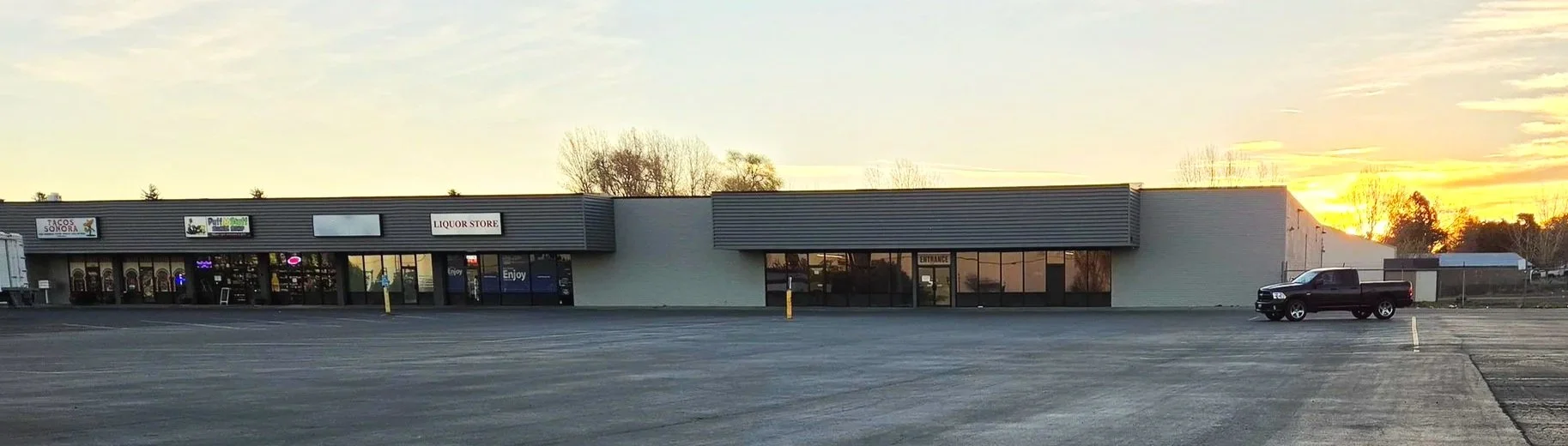
Early morning start in Jerome, ID
The E2018 baseline is a defined, repeatable scope: a walk-through survey of the property and its major systems, research and interviews with people who know the building, and a Property Condition Report identifying material physical deficiencies with opinions of probable cost. Immediate repairs are called out. The consultant is a generalist with well-rounded knowledge across building systems, observing what is visible and accessible on a single visit.
It is designed to be commercially reasonable, which is a real engineering concept and not a hedge. Good information at a proportionate price, on a transaction timeline.
What the baseline does not do is resolve the uncertainties a particular asset carries. A generalist walking a 20-year-old flex building will identify a membrane past mid-life, note ponding, and price a replacement from published cost data. A roofing specialist will core it, tell you what is underneath, and tell you whether you are buying a recover or a tear-off. Those are different numbers. On a large roof, they are very different numbers.
What Changed in the 2024 Revision
E2018-24 replaced E2018-15 in January 2024, with more than 140 revisions. Most are refinements, but several change what a report should contain:
Observation is no longer purely visual. The revision recognizes that a competent field observer works by ear and by nose as well as by eye. A failing bearing and a wet return plenum announce themselves before they are visible.
Immediate costs are defined more tightly, covering deficiencies requiring prompt action, including life-safety conditions, imminent system failures, and code violations.
Primary improvements exclude ancillary support structures such as maintenance sheds and utility garages, clarifying a boundary that used to get argued.
User-consultant communication moved to the foreground. The user's objectives and risk tolerance drive the scope, and the standard discusses specialists and custom scopes directly.
That last one is the practical headline. The revision expects a scoping conversation to happen, and expects the report to document the scope that resulted.
The Additions Worth Considering
The standard's nonmandatory appendix describes the modifications available to a user. Six come up regularly in this region.
Specialists on high-cost systems. Structure, roofing, facades, elevators, and the mechanical, plumbing, electrical, and fire protection systems are where the money hides. A specialist on one or two of those is usually the highest-value addition available on an equipment-heavy or aging asset, and the easiest to scope precisely. The mistake is adding specialists across the board, which multiplies cost without concentrating it where the risk sits.
An opinion of long-term costs. The addition most often assumed to be included, and it is not. It projects major refurbishment and replacement across an agreed term based on remaining useful life. The standard attaches honest limits: it is an order-of-magnitude opinion, it excludes design, permitting, and professional fees, and any inflation factor applied is a constant rate rather than an economic forecast.
Service company research. Contacting the companies that actually service the HVAC, fire protection, elevator, or roofing systems produces what a single-day survey cannot: chronic repairs, pending work, outstanding proposals, and the maintenance history the seller's file omits. On a property with thin records and a long service history, it is often the fastest route to the truth.
Field-verified measurements and counts. Unit counts, parking counts, and building areas can come from drawings and owner documentation, or they can be established by walking every floor of every building and counting. The standard treats those as different products, because they are.
Additional systems observed for condition. Some improvements are noted in a baseline report but not evaluated for condition or cost unless the user asks: electrical generation equipment, building and energy management systems, EV charging equipment, telecom equipment, and tenant-owned equipment affixed to the property. Where any of them carry real value or real liability, they belong in the scope by name.
Flood plain designation. Whether the property encroaches on a FEMA-designated special flood hazard area is an enhanced item, not a baseline one.
| Addition | The uncertainty it removes | When it earns its cost | Schedule impact |
|---|---|---|---|
| Roofing specialist | Whether the number is a recover or a tear-off | Membrane past mid-life, large roof area, ponding, or prior patch history | Return visit; core sampling requires owner consent |
| Mechanical or electrical specialist | Whether aging equipment has usable life or is running on borrowed time | Equipment-heavy assets, packaged rooftop fleets, aging service equipment, tenant-critical process loads | Return visit; coordination with service contractor |
| Structural or facade specialist | Whether observed cracking is cosmetic or progressive | Tilt-up or masonry with visible cracking, settlement indicators, or prior repairs | Return visit; may trigger further engineering |
| Opinion of long-term costs | What the asset costs to hold beyond the immediate term | Any hold longer than two or three years, partnership reporting, or capital budgeting | None; desk work after the field visit |
| Service company research | Chronic and pending repairs the owner's file omits | Thin documentation, long service history, deferred maintenance suspected | None; adds days, not a visit |
| Field-verified counts and measurements | Whether the rent roll and the building agree | Unit or parking counts that drive price, or an area figure that drives a per-square-foot number | Adds field hours; must be scoped before the visit |
| Additional systems evaluated | Value or liability sitting in equipment the baseline only notes | Generation equipment, EV charging, building automation, tenant-owned
Note: This table is a general guide. The right additions depend on the asset, the hold period, and the lender's requirements. Three questions usually settle it. Which system on this property is most capable of producing a surprise, and would a specialist reduce that risk? Will the report build a budget beyond the immediate term? Are there quantities in this transaction where being wrong would cost someone money? What the Lender Will AcceptAn enhanced scope remains an E2018-24 assessment as long as the supplemental services are identified in the report along with the activities performed, the information obtained, and the findings. Adding scope does not put a report outside the standard. Omitting scope the lender expected does. Agency and insured lending programs run on their own scope forms, and those forms routinely require more than the baseline delivers. A borrower who orders a baseline PCA for a transaction that required an agency-format assessment has not bought a cheaper report. They have bought a report they will pay for twice. Reserves for condominium and other common interest properties work the same way. The standard states that its long-term cost opinions are not suitable for establishing those reserves, which carry regulatory and accounting requirements the guide does not address. A reserve study is the correct instrument. We can tell you what the buildings are doing; the reserve calculation belongs in a different report by someone doing that work on purpose. Ask the lender which standard or form the requirement names, and get the answer in writing before scope is set. Scope Before the Field Visit, Not AfterSome additions can be layered on afterward. Service company research and a long-term cost opinion are largely desk work, and both can be added once the report is drafted. Anything requiring eyes on the building cannot. Specialists, field counts, and field measurement all mean a second mobilization, a second scheduling conversation with property management, and a second round of tenant notice. Which is why a scoping conversation should precede a price. A consultant who quotes a commercial PCA without asking what the report has to answer is quoting a product, not scoping an assignment. Calibre Commercial Inspections performs ASTM E2018 Property Condition Assessments across Idaho, Eastern Oregon, Eastern Washington, and Western Montana. We scope each assignment against the decision the report has to support, and we will tell you when an addition is not worth buying on your property. Contact us to discuss scope before you order the report. Previous
Previous
Welcome to the Hard Hat Zone!Next
Next
The Defect Is the Cheap Part |