
How We Found Hidden Water Intrusion on a Commercial Roof (When the Ceiling Showed Nothing)
At Calibre Commercial Inspections, we see a lot of flat roofs with ponding water. Most of the time it’s a maintenance headache, but sometimes it’s quietly destroying the building from the inside out.
Yesterday, we inspected a flat roof system that had enough water ponding on it to build a koi pond. Not good at all. In some spots, it looked more like a small lake than a roof.
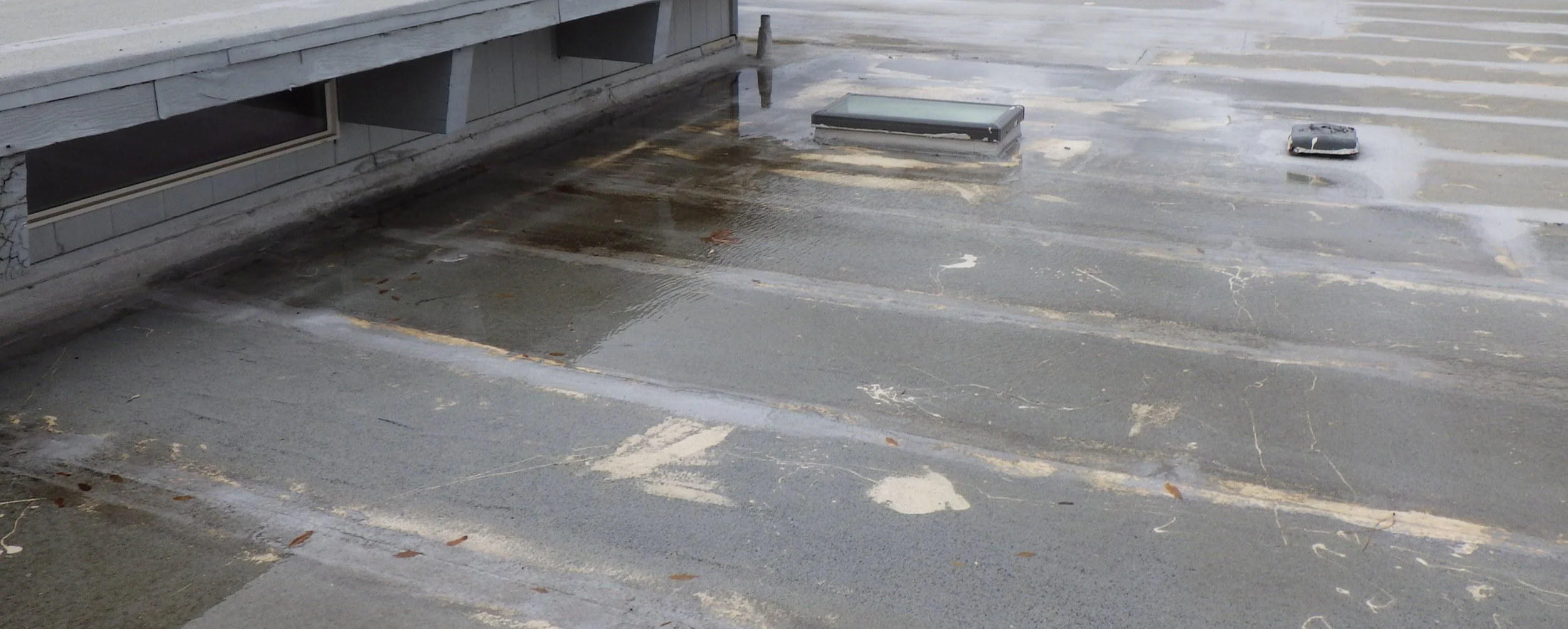
Standing water by itself isn’t automatically a deal-killer on commercial flat roofs (some ponding is allowed by code if it dries within 48 hours), but when you have this much volume, the next logical question is, “Is any of that water getting inside the building?
The seller swore it wasn’t. The property manager swore it wasn’t. Most importantly, the tenant spaces below the “lake” had perfectly clean, unmarked ceilings. Not a single stain or drip in sight.
That’s exactly when we get curious. We expected water. It’s not there, but the roof had been repeatedly patched – another big red flag. What’s going on?
The Tool That Sees What the Human Eye Can’t
The buyer authorized a limited-scope infrared (thermal imaging) scan of the roof and the interior ceiling from below. The fee was nominal because we were only scanning the areas directly under the visible ponding.
Within minutes we had our answer.
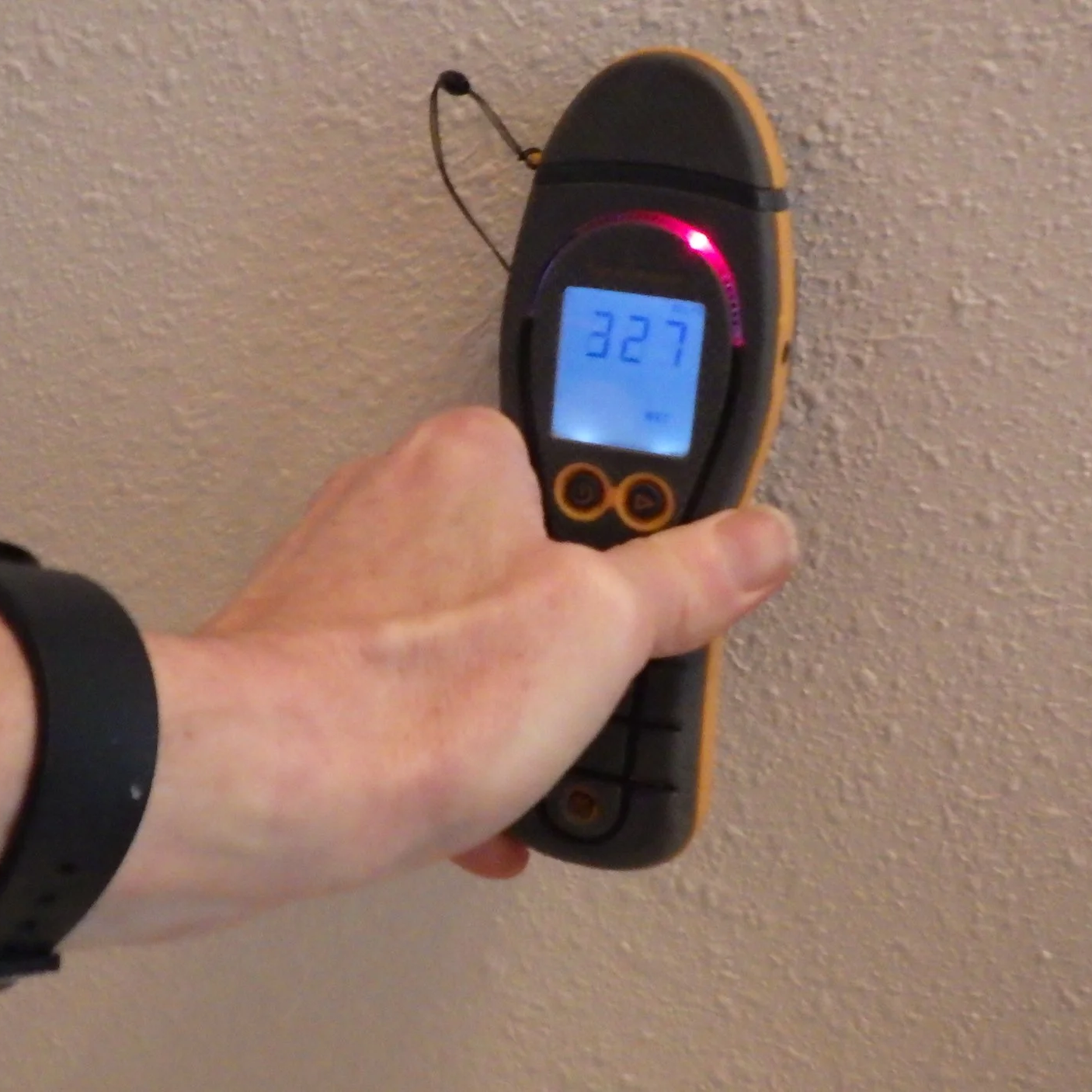
The infrared camera revealed a clear, sharp temperature differential exactly matching the shape and location of the standing water above. The reading on the underside of the roof deck hit 32.7% moisture content in multiple spots (see the Protimeter reading in the photo – yet another very useful tool).
Dry wood-fiber insulation and decking should be 7-11 percent range at this time of year.
Translation: water had been migrating through splits, failed seams, and around penetrations, quietly saturating the insulation and roof deck.
The reason nothing showed on the ceiling drywall? We were in the beginning stages of a major problem. Left alone, this would have turned into deck rot, mold, interior repairs, and profoundly unhappy tenants.
Key Takeaways for Buyers & Owners
No ceiling stains ≠ no leak.
Many commercial roofs have insulation, vapor barriers, or suspended ceilings that hide evidence for a long time.Ponding water is a red flag worth investigating.
Even if the roof is “supposed” to pond a little, large or persistent lakes dramatically increase the odds of intrusion.Infrared thermography is fast and non-destructive.
On a limited scan like this, we can cover thousands of square feet in minimal time and at minimal expense to pinpoint exactly where to open the roof for confirmation.Finding it early saves tens (or hundreds) of thousands.
In this case, the buyer negotiated a substantial credit for surgical roof repairs and insulation replacement instead of gambling on a total roof failure in the next big winter storm.
The Bottom Line
If you’re buying, selling, or managing a commercial property with a flat roof, don’t trust a clean ceiling. A quick infrared scan during the due-diligence period can reveal hidden water damage that no amount of visual inspection will catch. Have a roof that ponds like a swimming pool after rain? Give Calibre Commercial Inspections a call. We’ll take the time to go the extra mile to make sure you get the information you need.