
Assisted Living Facility Due Diligence: A Full-Scope Guide
Life safety, regulatory exposure, building systems, and operational fitness for buyers, owner-operators, and lenders
Most commercial real estate transactions involve an asset and a tenant relationship. Assisted living transactions involve an asset, an operator, a state license, a regulatory framework, and a resident population that, by definition of the use, cannot reliably self-evacuate. That last fact changes every assumption built into standard due diligence.
Standard commercial inspection assumes that occupants can respond to building failures — hear an alarm, identify an exit, walk down a stair. Assisted living facilities are designed around the opposite assumption. Sprinklers and compartmentation are not redundancies; they are the primary life safety strategy. A roof that ponds is not a deferred maintenance line item in isolation. It is a building-systems failure that can drive air-handling problems, which in turn drive temperature-control failures in rooms occupied by residents who do not tolerate environmental swings.
Buyers, owner-operators, brokers, and lenders evaluating assisted living properties in Idaho, Eastern Oregon, Eastern Washington, and Western Montana should understand the four pillars of due diligence that this property class demands: life safety systems, regulatory compliance and licensure, building systems and condition, and operational and accessibility fitness. Each pillar is more consequential here than in standard commercial real estate, and each fails differently.
What Makes Assisted Living Different from Other Commercial Real Estate
Assisted living is residential care for older adults who need help with activities of daily living — bathing, dressing, medication management, mobility assistance — but do not require 24-hour skilled nursing. The asset class sits between independent living (no care, conventional multifamily) and skilled nursing facilities (CMS-regulated, Medicare and Medicaid reimbursement, more federal oversight). Memory care is typically delivered within secured wings of assisted living facilities for residents with dementia.
Licensure is the operational reality. Idaho regulates Residential Assisted Living Facilities through the Department of Health and Welfare’s Bureau of Facility Standards. Washington licenses assisted living facilities under chapter 18.20 RCW with regulations at WAC 388-78A, administered by the Department of Social and Health Services. Oregon administers OAR 411-054 through the Department of Human Services. The agencies vary, but the principle is consistent across the region: a building that fails state inspection cannot legally operate as an assisted living facility, regardless of its real estate value.
This collapses the standard distinction between physical asset and operating business. In office or industrial CRE, a building condition issue affects value and capital planning. In assisted living, a building condition issue can affect the license — and the license is the business. Due diligence has to evaluate the building as a regulated facility, not just as real estate.
Life Safety Systems Are the Whole Premise
The International Building Code typically classifies assisted living facilities as Group I-1 (institutional, with Condition 1 for residents capable of self-preservation and Condition 2 for those requiring physical assistance) or Group R-4 (residential care/assisted living), depending on resident count and acuity. NFPA 101, the Life Safety Code, applies through chapters covering residential board and care or healthcare occupancies, depending on the same factors. State regulators and authorities having jurisdiction make the classification, and the classification drives the requirements.
Four life safety systems carry most of the weight:
Detection and alarm. Addressable fire alarm systems with central station monitoring, smoke detection in resident rooms and common spaces, and integration with the facility’s emergency response plan. Older facilities often have legacy systems that have been patched repeatedly rather than upgraded; that pattern matters in diligence.
Suppression. Automatic sprinkler systems are required for new construction and for many existing facilities through retrofit requirements. NFPA 13 governs full systems; NFPA 13R covers residential systems in buildings up to four stories. The presence of a sprinkler system is not the end of the question — its condition, coverage, water supply, and inspection records are.
Compartmentation. Fire-rated corridor walls, smoke barriers dividing the facility into smoke compartments, and fire doors at compartment boundaries. Because residents cannot reliably self-evacuate, the life safety strategy is not “everyone leaves” but “contain the event and relocate residents to a safe compartment.” Compartmentation integrity is therefore not a paper compliance item; it is the primary line of defense. NFPA 80 requires annual inspection of fire doors, and fire-rated assemblies degrade over decades in ways that are often not visible without targeted evaluation. Facilities built in the 1980s and 1990s frequently show compromised fire separations in attic spaces — penetrations from later mechanical or electrical work that were never restored to the original fire rating.
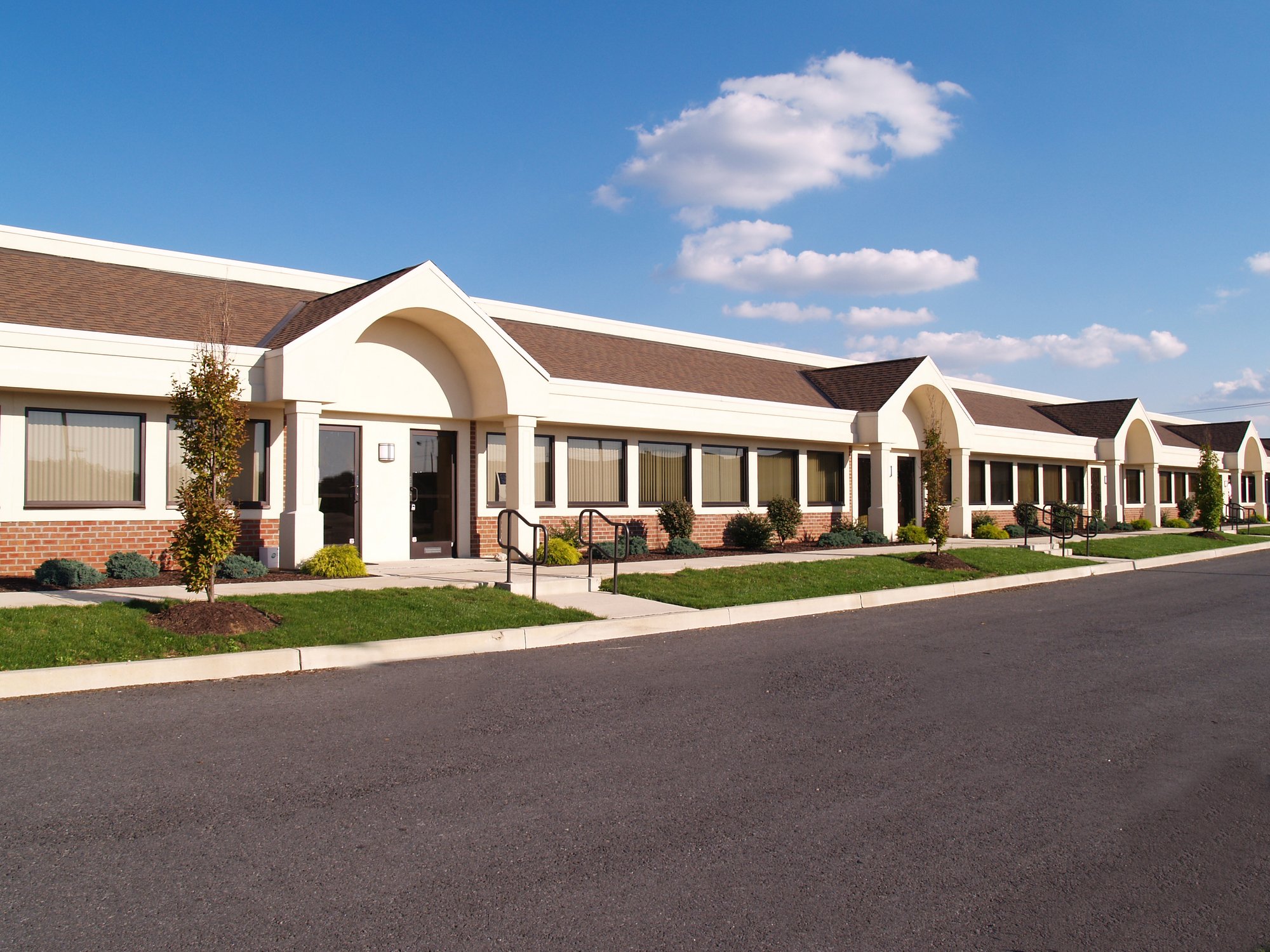
Assisted Care Facilities Have Higher Burdens to Shoulder
Egress and emergency power. Corridor widths, exit signage, emergency lighting, and generator-backed emergency power systems for life safety loads. Generators in assisted living are not optional infrastructure; they are required for designated branches of the electrical system and are tested under code-specified intervals.
A facility that meets all four pillars on paper can still have failure modes that only surface on inspection. The diligence question is not whether the systems exist, but whether they will perform when called on.
Regulatory Compliance and Licensure Risk
State licensure is the gating factor for operations. The state inspectors who maintain a facility’s license evaluate it against rules that often go beyond building code minimums. Issues that would be classified as deferred maintenance in office CRE — a water-damaged ceiling tile in a resident hallway, a non-functioning exit light, an EIFS panel with active moisture intrusion — can become license-impacting findings in an assisted living context.
Beyond state licensure, several federal and local layers apply. ADA Title III governs public-accommodation accessibility for the portions of the facility used by visitors and ambulatory residents. The Fair Housing Act applies to the residential portions, with overlapping but distinct accessibility requirements. The state fire marshal or local fire authority having jurisdiction conducts independent inspections under NFPA 101 and adopted state amendments. Local building departments enforce the certificate of occupancy, which can be affected by significant changes in use, occupancy, or condition.
For buyers and lenders, the practical consequence is that two facilities with identical PCA findings can have very different regulatory exposure. A facility with deferred roof maintenance, an aging fire alarm panel, and Federal Pacific Stab-Lok or Zinsco electrical panels still in service is not just accumulating deferred maintenance — it is accumulating risk that intersects with each of the regulatory regimes named above. The cost-to-cure analysis on a transaction like this should explicitly account for licensure risk, not just capital expenditure.
For owner-operators, the same principle applies in reverse. Capital reserve budgets that treat the facility as conventional real estate consistently underestimate the replacement curve, because they fail to weight the life safety and licensure dependencies that drive the timing of work.
Building Systems: Where the Asset Class Concentrates Risk
Many assisted living facilities in the region were built between the early 1980s and the late 1990s, often with additions and modifications added over time. That construction era introduces several patterns worth understanding before any transaction.
Roofing. Multi-roof configurations are common — original clay tile or asphalt shingle systems on the initial structure, PVC or TPO membrane systems on additions. Each system has its own service life, failure mode, and maintenance requirement. Flat membrane roofs added to single-story facilities often develop ponding at low points, which accelerates membrane degradation and creates pathways for water intrusion at penetrations. Concealed damage under membrane systems is one of the more expensive surprises in this asset class, because it frequently extends into the structural deck.
Building envelope. Exterior Insulation and Finish Systems (EIFS) saw heavy use in the construction window relevant to many existing facilities. EIFS performs well when terminations and penetrations are properly detailed and maintained, but cracking, sealant failure at windows and roof transitions, and moisture intrusion at the foundation line are common defects in the field. Wood-framed soffits at roof eaves are another recurring moisture-damage location, particularly where roof drainage was not detailed to direct water away from the wall plane.
HVAC. Assisted living facilities typically deploy multiple zoned heating and cooling systems — rooftop units serving common areas, separate systems for resident wings, and attic-mounted air handlers in older configurations. Two factors drive the diligence question. First, residents have low tolerance for environmental failure; loss of heating in winter or cooling in summer is a resident-welfare event, not a comfort complaint. Second, the multi-system design means that the replacement curve is not a single major capital event but a rolling schedule, which is often poorly captured in seller-provided capital plans.
Electrical. Service capacity for a facility designed in the 1980s is generally adequate for current loads, but distribution panels of that era can include known failure modes. Federal Pacific Stab-Lok panels and Zinsco panels were both installed widely in commercial construction of the period and have documented failure-to-trip histories that create real fire risk. Their presence in an assisted living facility is a defect that should be addressed regardless of operational status. Emergency power systems — generators, automatic transfer switches, and designated emergency branches of the distribution — are required by code for life safety loads and require both initial verification and ongoing maintenance documentation.
Plumbing. Domestic hot water generation capacity, tempering valves at fixtures used by residents, backflow prevention, and fixture-level accessibility are the four diligence areas. Scalding is a documented injury mode in assisted living; codes and state rules generally require thermostatic mixing valves to limit delivered water temperature at resident-accessible fixtures.
The pattern across building systems is consistent. Defects that would be priced as deferred maintenance in other commercial real estate carry additional weight in assisted living because of their downstream effect on life safety, resident welfare, and licensure.
Operational and Accessibility Fitness
Beyond the building systems sit several operational areas that a competent assisted living inspection should evaluate.
Kitchen and food service. Commercial kitchen condition, exhaust hood compliance with NFPA 96, dishwasher temperature compliance, walk-in cooler and freezer condition, and grease management. State health department requirements add a layer on top of building and fire code.
Laundry. Industrial laundry rooms have specific ventilation, lint management, and chute construction requirements. Dryer exhaust fires are a documented commercial property loss; lint accumulation in long runs is the common cause.
Medication storage and treatment areas. Security and access control at medication rooms, environmental controls for medication stability, and integration with the facility’s electronic and life safety systems.
Memory care. Where memory care is delivered within the facility, secured perimeter and door control, wandering prevention, observation sight lines, and enclosed outdoor areas all become diligence items.
Accessibility. ADA Title III compliance for the public-accommodation portions of the facility, Fair Housing Act compliance for the residential portions, and the practical accessibility question of whether residents — many using mobility aids — can navigate from their rooms to common areas to outdoor space without barriers. Routes-of-travel evaluation is a value-add survey separate from the baseline inspection.
Site and access. Covered drop-off areas, emergency vehicle access, family parking, staff parking, and pedestrian routes from parking to entry. Sites designed in the 1980s often do not meet current accessibility expectations even where they meet historical code.
Engaging Competent Due Diligence
ASTM E2018 establishes the baseline scope for a Property Condition Assessment: describe the major systems, identify material physical deficiencies, and produce an opinion of probable costs. The CCPIA Commercial Standard of Practice covers similar ground at the inspection-report level. Both standards are appropriate baselines, and neither is sufficient on its own for an assisted living facility.
Several value-add services routinely warrant inclusion on assisted living transactions:
• Cost-to-cure reports that translate identified deficiencies into prioritized capital schedules, with explicit attention to life safety and licensure dependencies.
• Capital needs assessments projecting replacement timing for the rolling schedule of HVAC, roof, electrical, and life safety system components over a 10- or 20-year horizon.
• ADA compliance surveys focused on parking, entry, common areas, accessible restrooms, and the routes of travel that link them.
• Fire door inspection under NFPA 80, which is required annually for fire-rated assemblies regardless of transaction status and is often deferred.
• Infrared thermography for envelope, roof, and electrical evaluation, which surfaces conditions not visible to standard inspection.
The boundary between inspection and engineering matters. A competent inspector identifies deficiencies, characterizes their probable severity, and refers to the appropriate specialist when a load calculation, structural analysis, or detailed engineering evaluation is warranted. The inspector is the entry point to comprehensive due diligence, not its substitute.
For buyers, the inspection supports a defensible negotiation position. For owner-operators, it supports a realistic capital reserve and operating plan. For brokers and lenders, it supports an honest representation of the asset to all parties. The same inspection serves all three constituencies when its scope matches the asset class.
Assisted living properties demand inspection scope that matches the complexity of the asset. Calibre Commercial Inspections provides full-scope due diligence for assisted living facilities across Idaho, Eastern Oregon, Eastern Washington, and Western Montana — covering life safety, regulatory and code compliance, building systems, and operational fitness. Contact us to discuss your property.